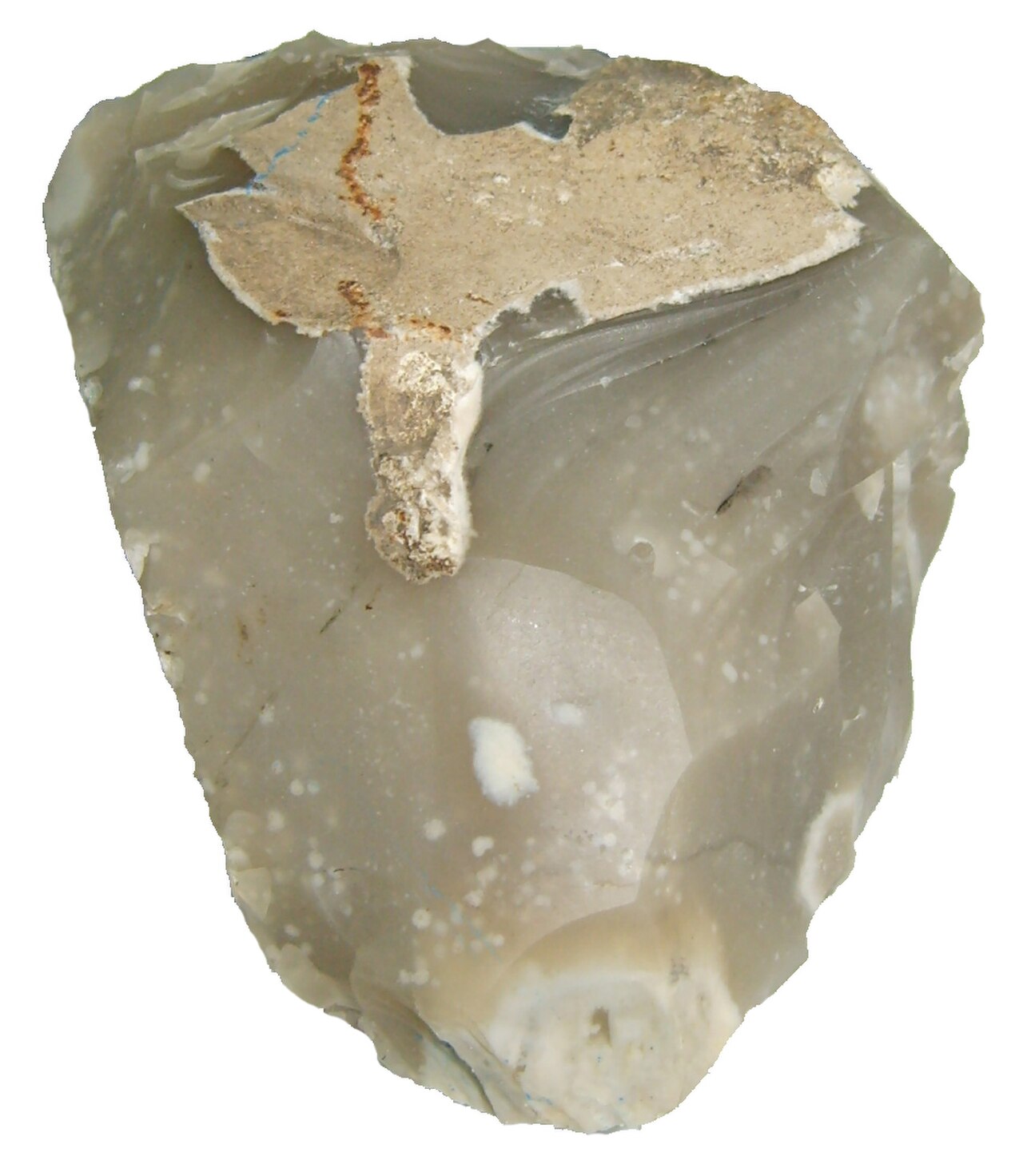
Dark variety of chert found as nodules in chalk and limestone. Used since the Stone Age for tools and fire-starting. Texture: Cryptocrystalline. Rock type: Sedimentary Chemical. Grain size: Microscopic. Minerals present: Microcrystalline quartz, Chalcedony. Formation: Forms as nodules in chalk from silica derived from dissolved sponge spicules and radiolaria replacing carbonate. Common geological settings: English Channel chalk cliffs, Denmark, Egypt; found as nodules in Cretaceous chalk. Common look-alikes and related entries: Chert, Obsidian, Jasper.
Chert vs Flint — Compare observable properties and safer field tests.
Sources, scope & corrections
These authoritative resources support category-level nomenclature, terminology, identification methods, and safety. When a specimen-specific safety warning appears, the public-health source listed here directly supports that precaution. They are not line-by-line citations for every other property on this entry, and natural specimens vary.
Editorial owner
GeoMiner
Last updated
2026-03-30T14:38:37.300618+00:00
Review status
Published; not independently peer-reviewed
Rocks — U.S. National Park Service. Authoritative overview of rock groups, the rock cycle, and geologic processes.
Dark variety of chert found as nodules in chalk and limestone. Used since the Stone Age for tools and fire-starting.
How can you identify Flint?
Compare several properties rather than relying on colour alone. This entry records rock type: Sedimentary Chemical; texture: Cryptocrystalline; grain size: Microscopic; common minerals: Microcrystalline quartz, Chalcedony. Confirm an important identification with additional field tests or qualified laboratory work.
How does Flint form?
Forms as nodules in chalk from silica derived from dissolved sponge spicules and radiolaria replacing carbonate.
Where is Flint commonly found?
English Channel chalk cliffs, Denmark, Egypt; found as nodules in Cretaceous chalk.
What is Flint commonly confused with?
Flint may be confused with Chert, Obsidian, Jasper. Compare multiple diagnostic properties because colour and surface appearance can overlap.
JavaScript is loading the interactive GeoMiner experience. The identification tools provide educational candidates, not laboratory confirmation.